A new Kale

I made a rare visit to my local garden centre last week as I had a couple of vouchers to use and was passing by anyway.  Not a lot I particularly needed but didn’t want to miss out on £7 worth of vouchers which were due to expire the following day. Scoured the Manager’s reduction shelves & was almost tempted by some winter pansies but opted instead for a marjoram plant for £1 and then some reduced sedums (I do occasionally buy some inedible plants!) as I already have a few and wanted a few more for a planned display next year.

I tried to avoid the seeds but my eye was caught by a sign which said “plant now” and this piqued my curiosity. The display included a few microgreens and winter lettuces, none of which took my fancy but there was also a red kale with the unprepossessing name of KX-1. Sold by Thompson & Morgan it promised ‘attractive kale for baby leaf and full maturity’ and priced at £2.49 (£2.99 on their website). Interestingly the packet gives different growing instructions than the website – the packet suggests sowing under glass or indoors from October through to March for use as baby leaves. A bit of scouting around online I discovered that this is, as I suspected from the lack of a more descriptive name, a newly developed variety, originating in the US and developed by Vilmorin North America and now being grown in the UK to meet the demand for kale for bagged salads for supermarkets. And also with added nutritional benefits as it has much higher iron content even than spinach – and apparently in a more easily digestible form. So an enhanced superfood!

So definitely unlike the heirloom varieties I’m normally attracted to. But I will be planting them and growing on my kitchen windowsill this weekend – and should be starting to pick them in 35 days as baby leaves. And if they look as attractive as on the packet they’ll help to brighten up a dreary January day. Watch this space….

An unproductive November

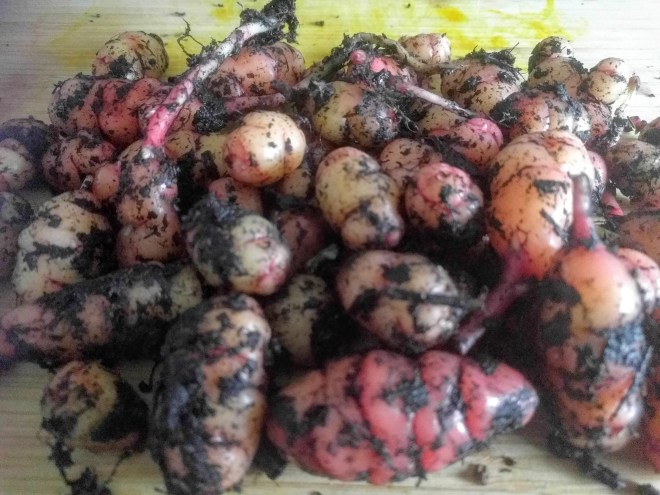
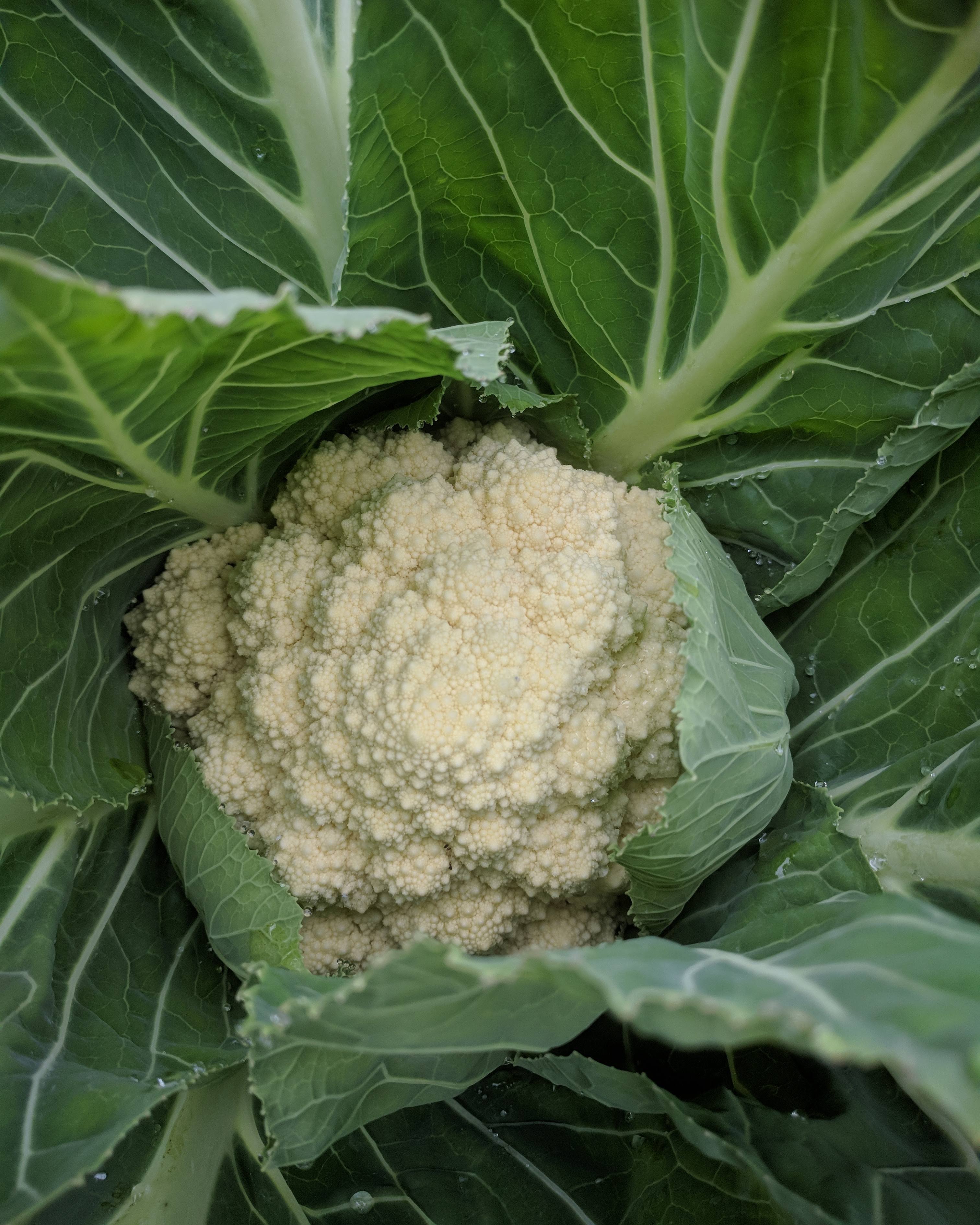
A combination of poor weather, a cold, a trip to London (on the best weekend of the month!) and a bad back have all contributed to a less than productive month on my plot.  I have barely been there to do anything but have made a couple of quick raids to see if there was anything worth harvesting.  And have been rewarded by still harvesting assorted lettuce leaves, oriental greens, kale, a couple of small cabbages, a romanesco cauliflower and finally last week the oca. I was disappointed by both the size of the oca harvest and the individual tubers. Not sure if it was the dry summer or maybe the hastily built raised bed and poor compost they were planted in.  Will try again next year as I do think they are a tasty crop – my daughter got hold of these and turned them into a surprisingly good vegan curry. 

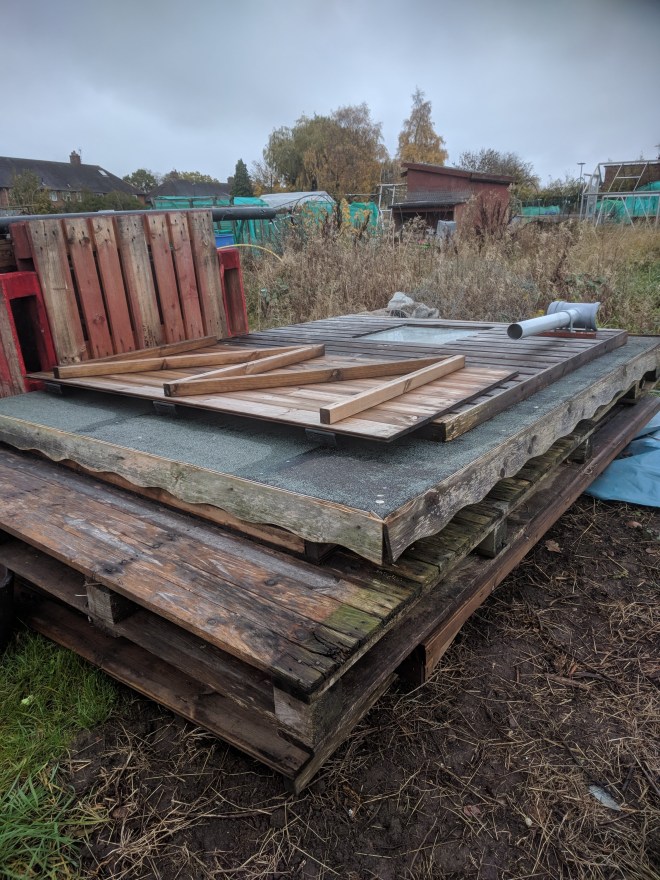
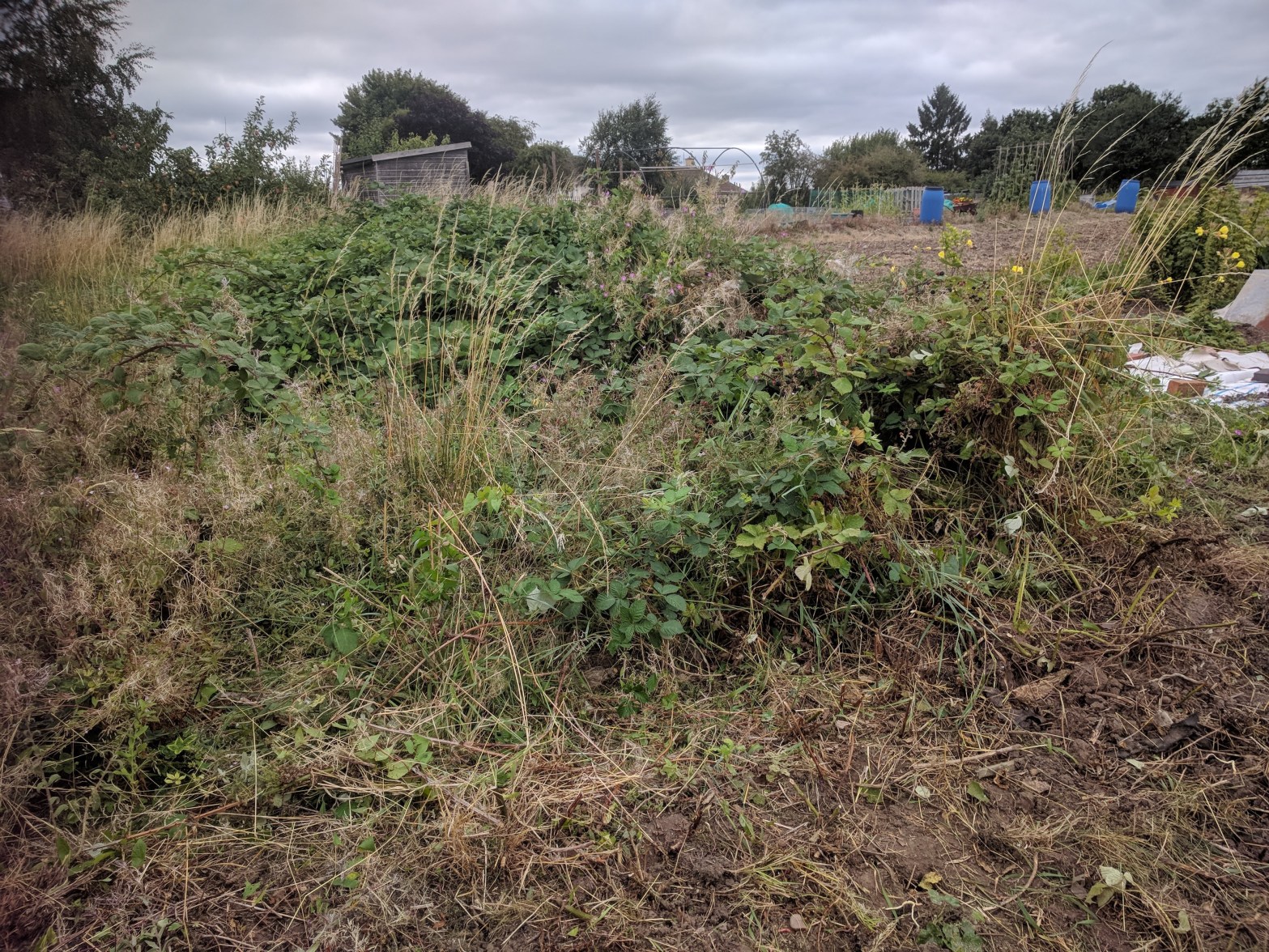
With help from fellow allotmenteers plus my daughter and her boyfriend I finally managed to move the shed I had purchased in the allotment auction way back in June on to my plot.  But I still have some issues to resolve before I feel confident about erecting it. There’s a vacant half-plot next to mine covered in brambles and I was asked to leave space at the top of my plot to allow access for the council to get across with machinery to remove them and rotavate the plot (personally I think this is a recipe for disaster!) and the route across would be just where I want to site the shed.  I’ve also learnt that a new drain is to be put in across the top of my plot. And none of this work is scheduled to take place until February at the earliest so somewhat thwarted at the moment.

Late Autumn happenings on the plot

Hard to believe we’re into November already! Where does the time go?  But even though the days are shortening and the temperatures dropping I’ve been finding lots of opportunities to visit my allotment plot and have been reaping the rewards of earlier plantings whilst getting lots of prep done for next year.

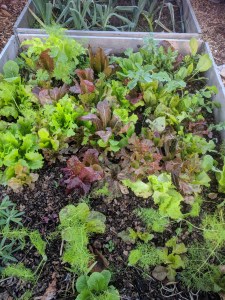
I’m still harvesting lettuce – Morton’s Secret Mix from Real Seeds IMG_20181020_174614– taking a few leaves at a time from each plant.  Throughout the summer I’d had no success at all despite several sowings but by September my last sowing had germinated and despite a slow start finally produced a decent crop and the plants are still going strong. This mix includes Reds, greens, brights, darks, splashes, blushes, crisps, butters, leafs, heads, and tongues. The mix is really attractive in a salad and all of them are tasty.I’m harvesting a bag full of leaves about once a week. Surprisingly they last really well in the fridge – much better than a commercial bag of salad despite them probably being in a protective atmosphere (at least until the bag is opened!).

I’ve been able to supplement this late summer crop with oriental greens – particularly img_20181028_174508_829mizuna and with some mustard greens too.  I was intending to make some successional sowings but haven’t gotten around to it (yet!) But if the mizuna keeps producing as well as it is at the moment maybe it’ll keep me going all winter….

I’d originally planted it in a bed in the polytunnel but once that had blown away I just put a fleece over it.  I can’t quite believe that a thin fleece can do much to stop freezing temps – I’d need one more than a few microns thick! – but it will keep off pests including the local pigeons. And the plants are supposed to be frost hardy anyway.

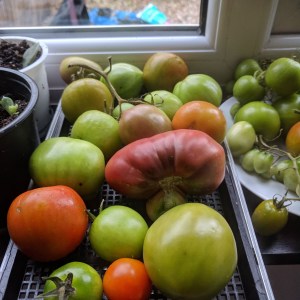
The beans and tomatoes are almost a distant memoryimg_20181028_174631_940 now although I do still have some from my garden ripening on the kitchen windowsill. I’m not a huge fan of chutneys (have to confess I prefer Branston pickle) so will wait for them to ripen gradually. I do fry some of them green and have with a breakfast fry-up.

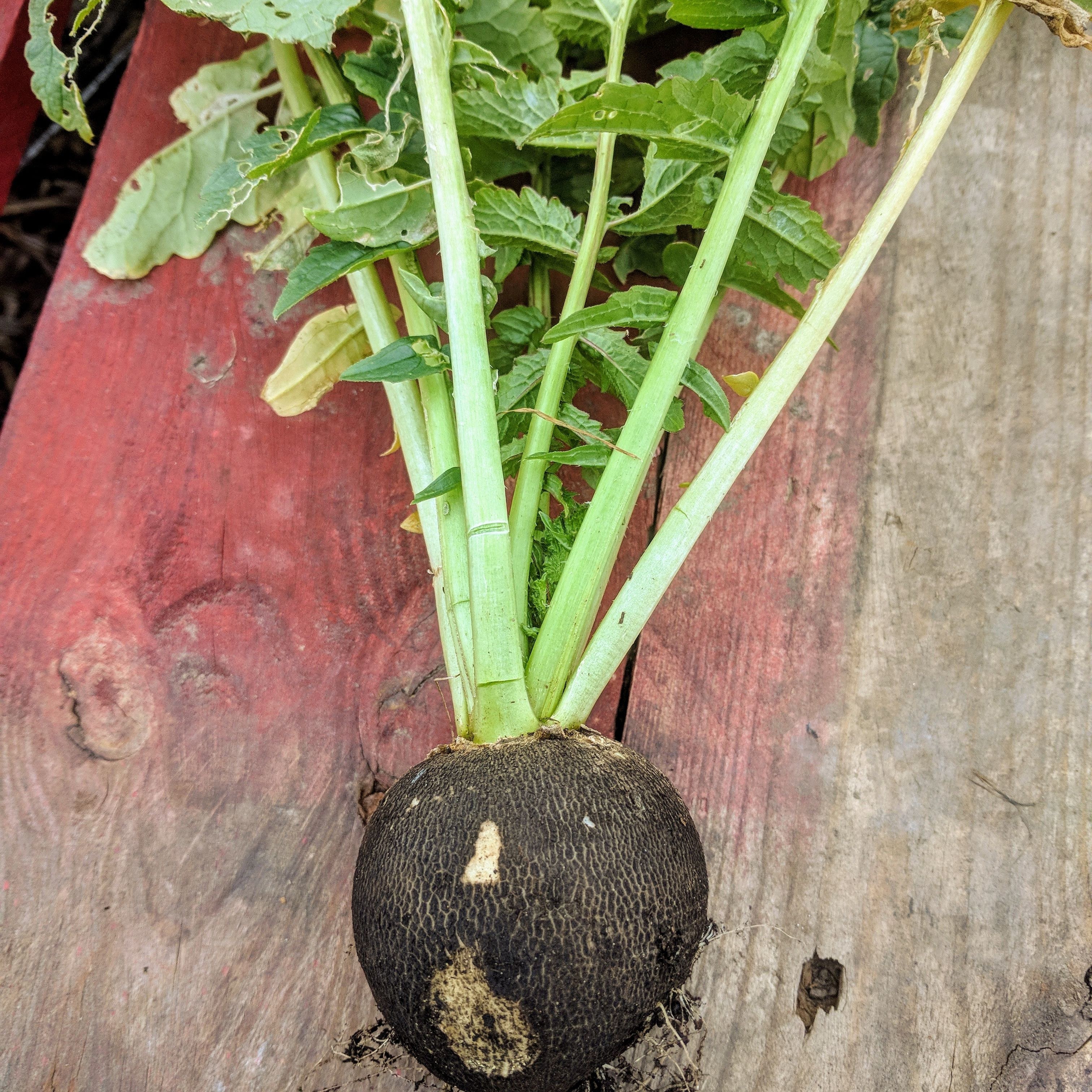
Although not a huge radish lover I’m hoping to be converted by different varieties, especially not I’ve discovered that cooked in a stir fry they img_20181103_180338_974actually taste quite pleasant.  So I’ve tried some Spanish black radish

I’ve not had a huge success with my brassicas although some are now coming on.  Despite being netted they have suffered some insect damage and now seem to have a whitefly infestation – do they not get killed by the cold?

I’ve had a couple of small broccoli spears and one slightly manky cauliflower. But the Cavolo Nero is looking good and I’ve started harvesting it by taking a few leaves each week.  There are a few cabbages which are starting to heart up and I even discovered some tiny sprouts starting to form – maybe they’ll be ready for Christmas? 😉

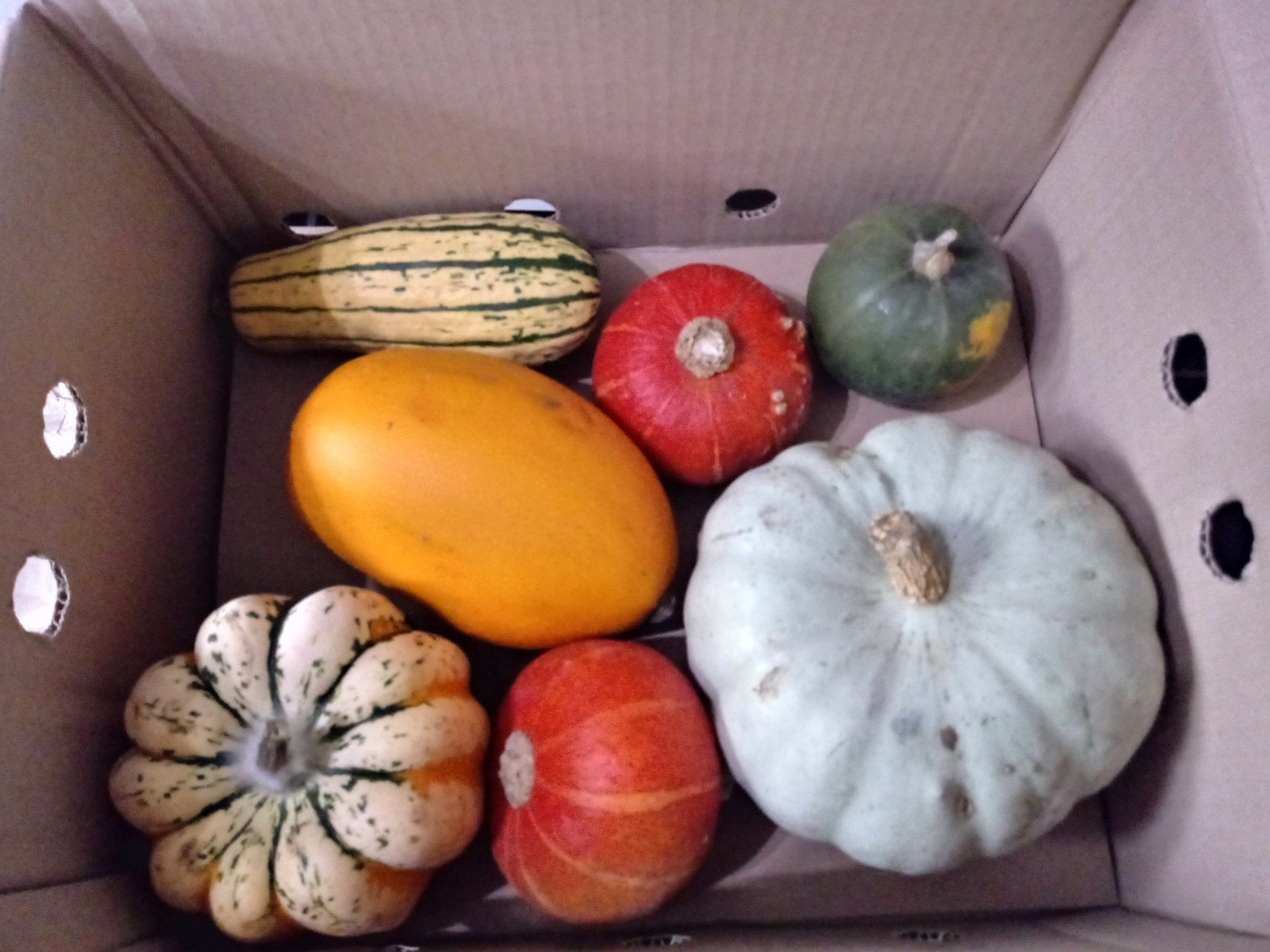
It was Halloween this week and I had managed to grow one pumpkin!  I’d picked it a couple of weeks ago whilst still green and had hoped it would ripen and go orange by 31st but it was still mainly green. I did do a very last carving to put outside for trick and treaters.

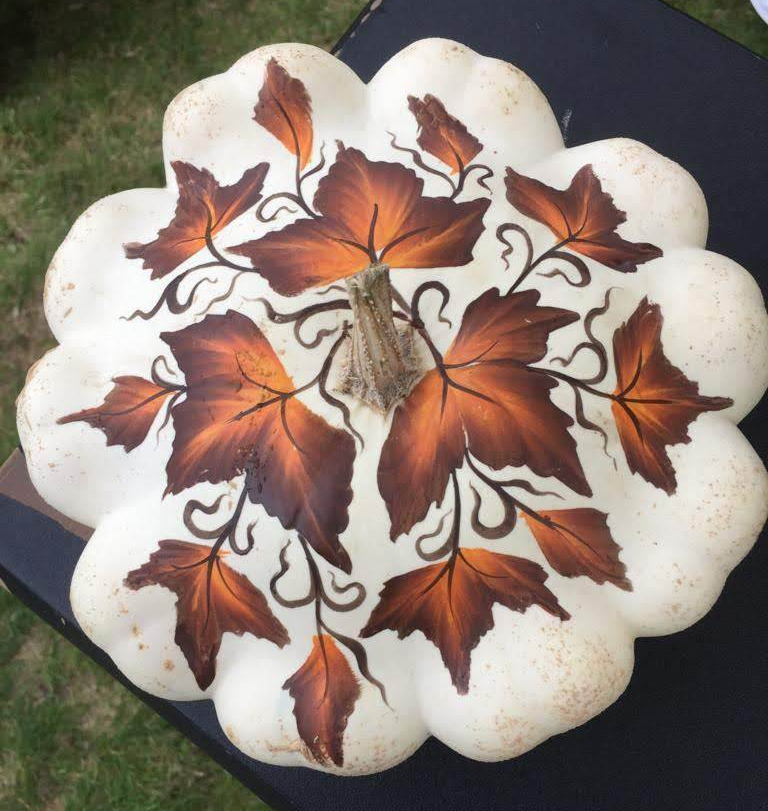
But my daughter’s creative skills put my feeble efforts to shame – and will provide a much longer lasting autumnal decoration.

Autunmnal decorated patty pan squash
Autumnal decorated patty pan squash

I’ve planted garlic and elephant garlic together with onions to see how they overwinter. And also field beans as a green manure on a couple of beds. Not too worried about the cold but am concerned about how wet it might be given that my plot was very sodden when I first took it on. I’m hoping that using raised beds will keep them out of the worst of the floods.

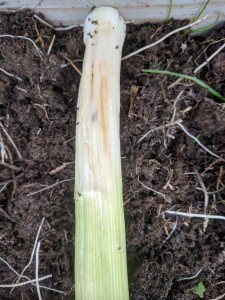
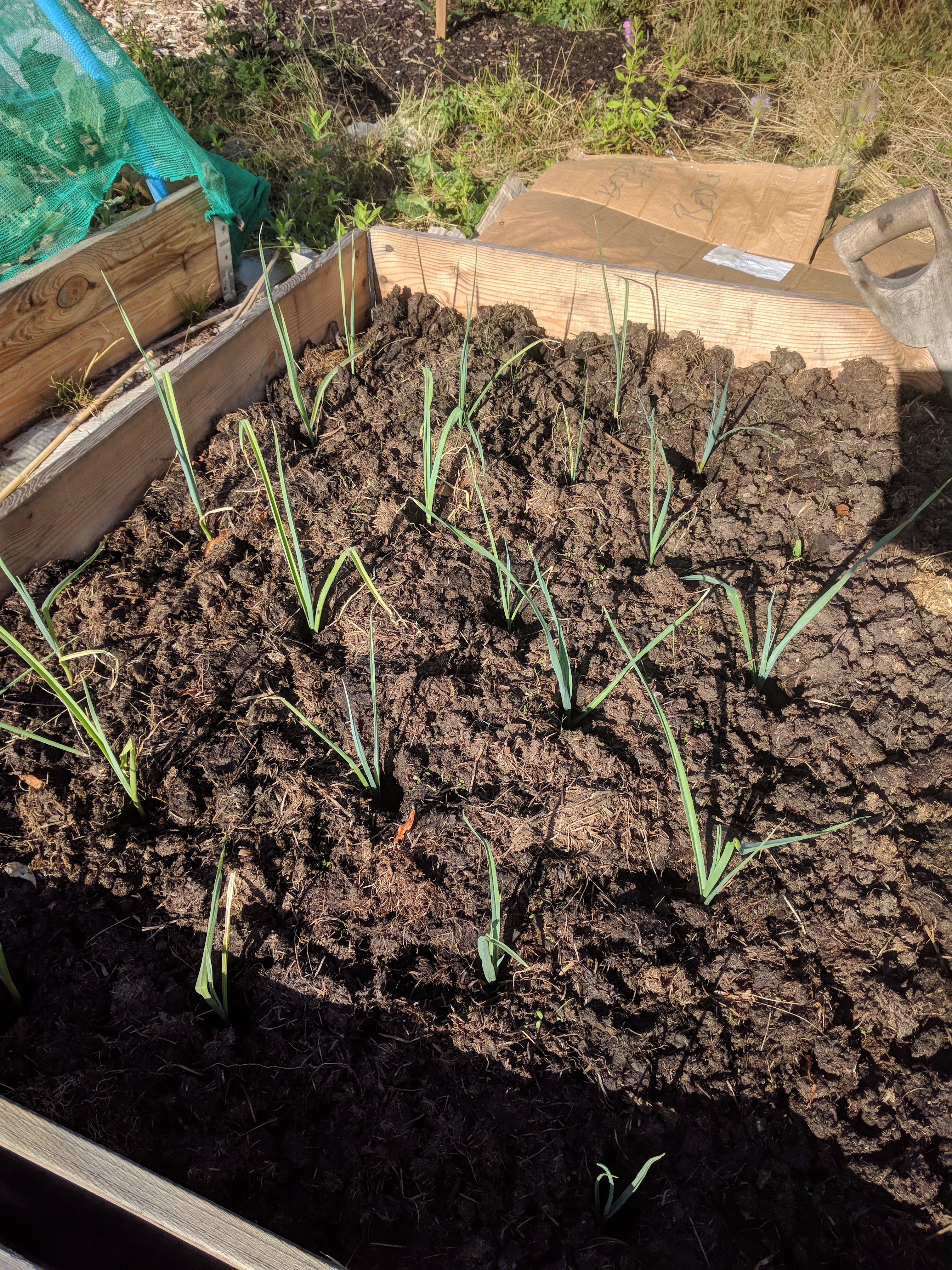
But I am disappointed about my leeks img_20181103_134003which have been infected by the dreaded allium leaf miner. The green leaves showed no signs so I was unaware of it until I harvested a couple of stems last week.  So I’ve now harvested them all and disposed of any infected material. And so instead of a crop that I hope would keep me going over winter, I’ve been left with a few usable remnants that might just be enough to make me cup-of-soup!  And of course, I am also a tad worried in case the bugs get onto my young garlic or onions. I’d planted elephant garlic in a gap in the leek bed but following the discovery of the ‘miners’ thought I should move them before they got too established.  But furtling around in the soil to find them as they don’t have any green growth yet I was surprised to discover how much root growth they had put on. I didn’t feel I wanted to disturb them as they were doing well so decided to take a chance on leaving them in situ and will cover them with mesh to prevent any later infestations.

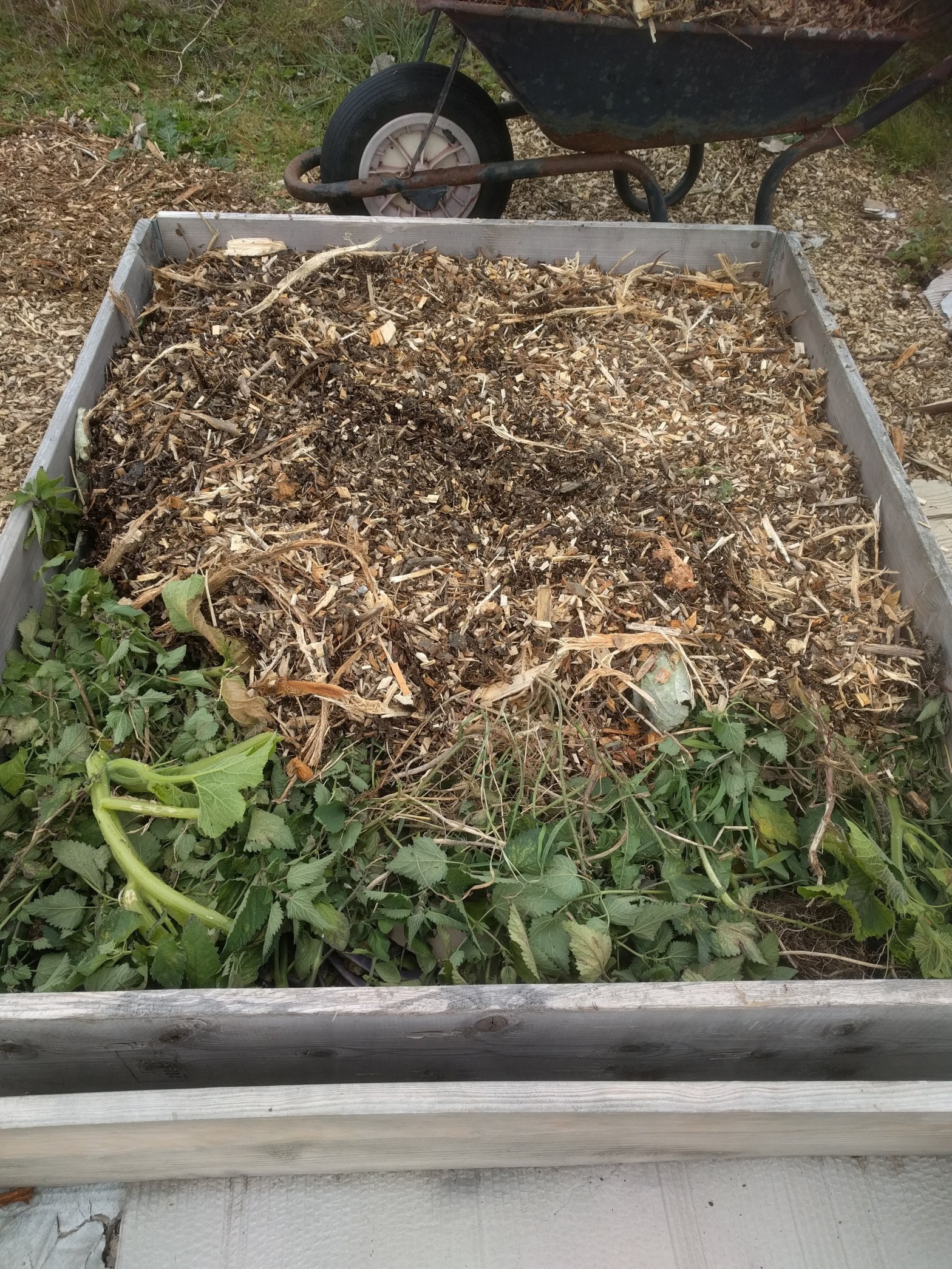
So all in all a bit of a mixed bag on the production side but I am pleased with the progress I’ve made on prep for next year already.  I’ve set up several more raised beds using the lasagna bed methodology. Layers have included cardboard, horse manure, semi-rotted compost, green and kitchen waste and leaves.  I’ll top up with a layer of compost when I’m ready to plant them.  I’ve sown a couple with a green manure mix and another with field beans which I’ll possibly chop as a green manure but may be tempted to leave to produce a crop.

And I’ve planted a few perennials – currant and gooseberry bushes, Daubenton’s Kale and asparagus and moved the strawberry bed.  So a productive month in many respects.

Will be concentrating now on prep for my first full gardening season in 2019; getting my shed built and hopefully salvage the polytunnel.  And sorting out my already large seed collection and filling the gaps from the ever-growing stash of catalogues piling up by my desk.


The Polytunnel Saga – a salutary lesson

When I first took on my plot the only structures I’d envisaged were a shed, raised beds, a compost bin and a wigwam for my beans.  But surveying the neighbouring plots I soon discovered that almost everyone had numerous other structures – hoop tunnels in all shapes and sizes, greenhouses and polytunnels.  And very soon my shopping list started getting longer. Which was a bit of a problem as my earnings – and hence my budget – seemed to be shrinking rapidly.

But as luck would have it our allotment association was organising an auction of unwanted items from plots that had, or were being, vacated as part of the downsizing programme.  And I had my eye on one of several sheds – and then my heart skipped a little beat when I discovered that there was also a polytunnel up for grabs!  I was actually out of the country during the auction but my neighbour had offered to bid for me on anything on my wishlist.  And when I got back I discovered she’d managed to get everything on my list (shed, polytunnel, water butts and canes – and I had money back too!


I then had many sleepless nights trying to work out how to move the shed and polytunnel several hundred metres across the site to my plot.  The shed has actually yet to be moved although I have had help to dismantle it and if we can get the allotment trailer mobile this task should be accomplished next weekend.  But a few weeks ago I was able to get the critical mass of people together to shift the tunnel without having to dismantle it.

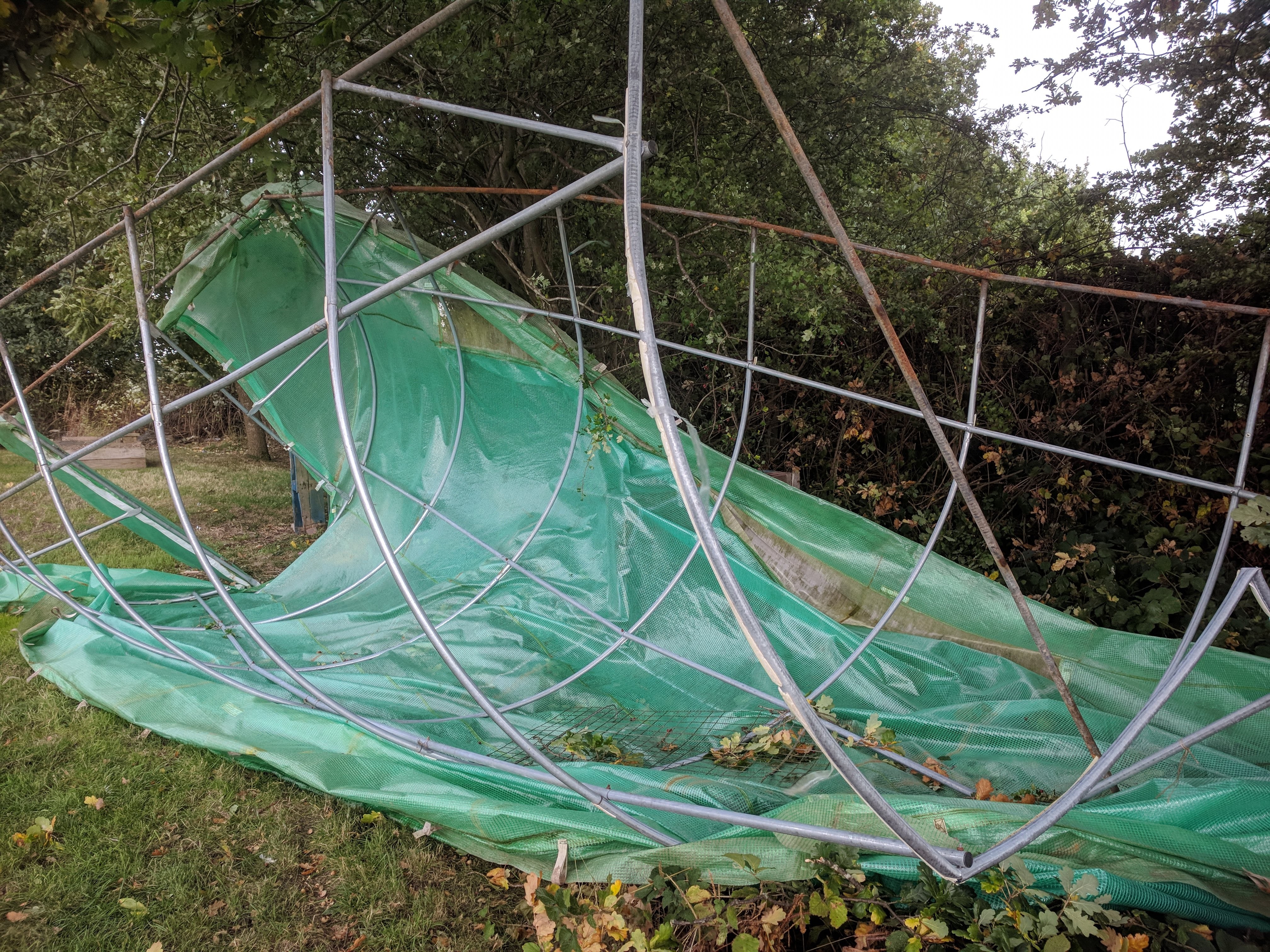
So a mix of family and new allotment friends all grabbed a bit of tunnel and with my brother-in-law directing us we set off around the site  like some giant green caterpillar. You can see what I mean by watching the video – and, as I find it far too upsetting to write about (boo hoo!)  do watch to the end to see what happened in high winds, just a few weeks after the triumphant installation of my new pride and joy 😉  The joy was definitely short-lived although I am still hoping to be able to salvage something from the wreckage.

And the lesson to be learned?  Take note of your neighbouring plotholders who warn you how strong the winds can blow across the exposed site – and always dig in your polytunnel covers before there’s a storm warning!

img_20180919_145032


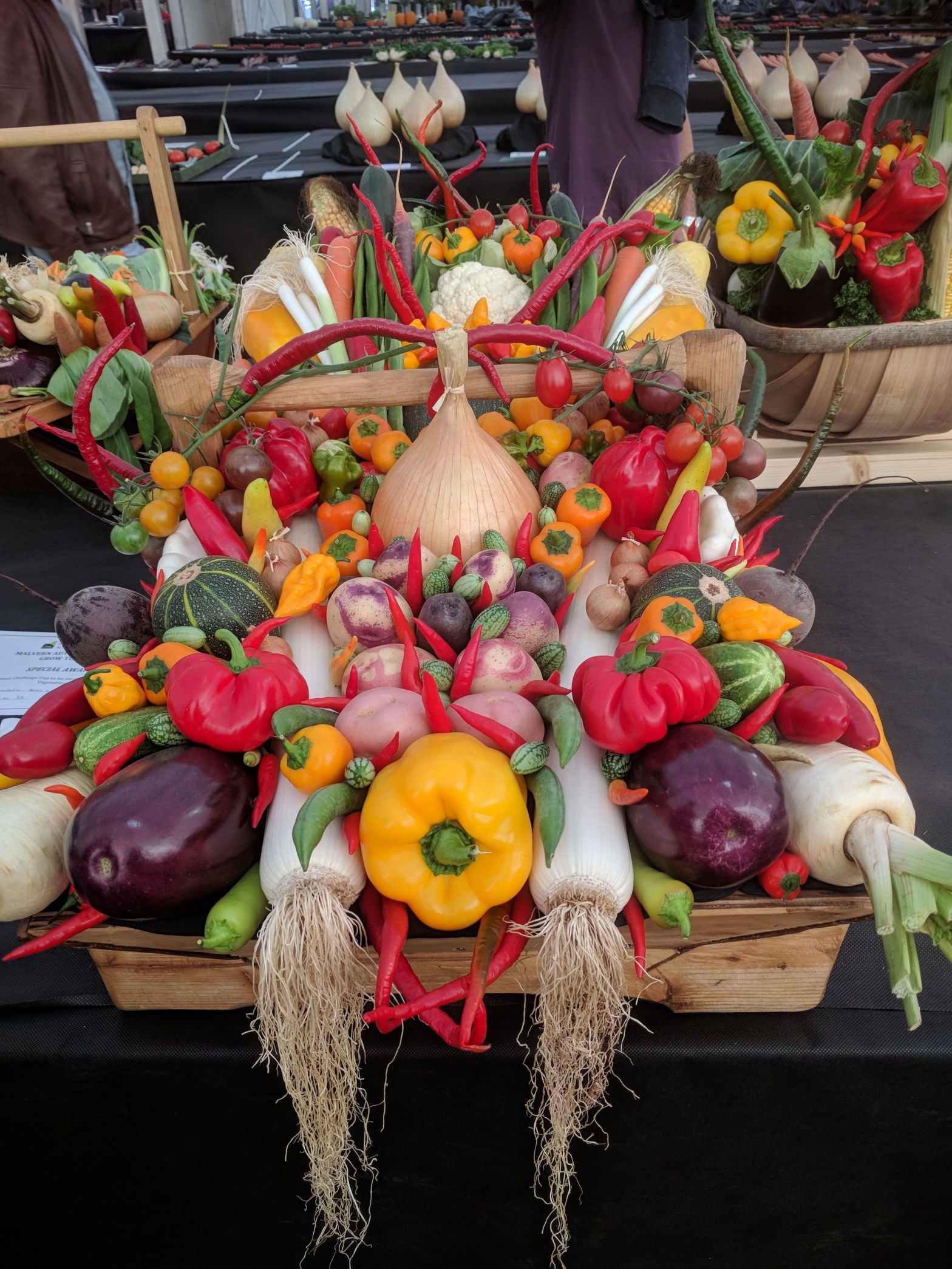
Malvern Autumn Show 2018

I’ve been happily snapping away this year on my allotment and elsewhere and thought I’d have a go at putting some of the images together into a video format – if only because I want to teach myself a bit more about how to create videos for future projects.

So here, for anyone interested is my first small effort showing images from a recent trip to the Malvern Autumn Show.  If you’ve never been I can strongly recommend it.  I went with my sister and her only complaint – there was too much to see! So we’re definitely going back in the Spring to see what is on offer there.

Video from the Malvern Autumn Show 2018


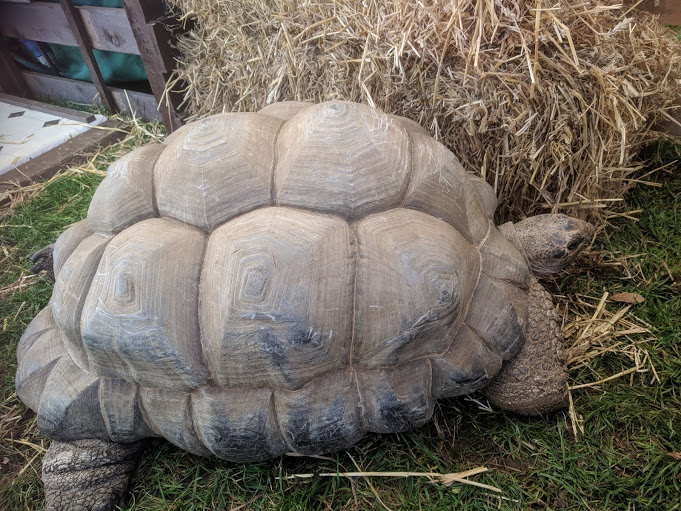
And because I omitted to include it in the video here is a pic of my favourite exhibit at the Show – a Giant tortoise! So much nicer than the freak show of the giant vegetables;-)

IMG_20180929_171634

Planning a perennial garden

I’m inherently quite lazy so much as I am enjoying gardening I want to be able to work towards making my allotment plot as self-   as possible. And I, hopefully not too naively, think that my approach can fit with ways of growing that make best use of natural resources, are organic and work with, rather than against nature.  So yes I believe that no-dig gardening methods as espoused by Charles Dowding will be just as productive, if not more so, than traditional methods of digging and double-digging. And at the same time I don’t have to exert myself too much other than mulching and compost-making. It will also be kinder to my back.

By the same token, it seems to make sense to grow a wide range of perennials, or self-seeding annuals, and reduce the amount of time (& space) on sowing, pricking out, growing on and planting out. There are rules on my allotment about the number of trees etc that can be planted so whilst I don’t think I’d get away with turning my whole plot over to forest gardening I am planning on using some permaculture ideas on at least a small corner of my plot – once I’ve tackled the brambles which are currently encroaching from the vacant pot next door.  More of a shrubbery or hedgerow garden than a fullscale forest garden but we all have to start somewhere!  So I’m currently keeping my eye out for bargain perennials and working on my design which I hope to be able to implement over the next year or so – as finances and time allow.

Traditionally a food forest has seven layers starting at the top with the canopy layer of large fruit and nut trees down through a low tree level, shrub level, herbaceous layer, ground cover, rhizosome/root layer and vertical climbers or vines.  I think I’ll have to dispense with large trees but am planning on trying for 6 layers.  So something along these lines at the moment forming both an edible hedgerow along two sides plus filling in an area close to my shed and surrounding a planned wildlife pond (which may also contain some edibles).

  • Low tree layer – dwarf or cordon apple & plum trees, szechuan pepper
  • Shrub layer – Black and red currants, gooseberries, chokeberries (aronia), sea buckthorn (nitrogen fixing)
  • Herbaceous layer – liquorice, perennial kale, rhubarb, Egyptian walking onions, comfrey, borage, sorrels, herbs eg feverfew, lemon balm, asparagus?
  • Ground cover – strawberries, ramsons
  • Root layer – Skirrett? Groundnuts? Jerusalem artichoke?
  • Vines – hops

So how far have I got?  A rough plan I’m playing with on my garden planner, a couple of plants in pots, a few plants on my plot which may need to be relocated, some sown seeds and others waiting for sowing/planting in spring – and a growing wishlist!


Autumn & Winter planning

Having just done a review of my first six months on the plot I’m now looking forward and doing some planning for the next six months.  Although I had a vague plan in my head of what I was going to do I’ve probably diverted from it more than I anticipated and whilst I think its always going to be a work in progress I think a bit more detailed planning at this stage won’t be time wasted.

So here (in print!) are my current intentions…..

October – oh my goodness one week has already gone!

  • With help attempt to salvage and repair polytunnel, then move back to plot and secure in place before re-attaching cover. Have also decided to move it further up the plot from its original location (having been reminded of site rules about location of structures! – and also concerned about possible damage from planned construction work on site near my plot.
  • In view of above will need to move a few of the existing beds slightly although hope the tunnel will simply slot over the top of them for now…..
  • Prepare base for shed then with assistance move shed purchased back in June on to my plot.
  • Continue work on layering lasagna beds and searching out supplies of brown/green material.
  • Order manure from Ron the muck man
  • Plant out or sow last crops for overwintering – more garlic? more winter salads?
  • Continue harvesting salad & courgettes until killed by frost
  • Hope pumpkin ripens by 31st!
  • Weed any beds that still need it

November – 

  • With assistance erect shed
  • Bonfire? Can burn any woody waste if needed this month.Not sure I’ll need to as any very woody waste I’m saving for a possible hugelkutur bed and this winter will probably be placed where it can provide a wildlife habitat
  • Give more protection to any growing crops if needed
  • Harvest – leeks & brassicas plus any winter salads
  • Arrange beds inside polytunnel (by now secured and mended!)
  • Top up existing beds with layer of manure
  • Take hardwood cuttings of blackcurrants (Dave’s?)
  • If allowed go on scavenger hunt of vacant plots on redundant side of site – looking out for useable timber, blue plastic piping, slabs, water butts, metal items

December

  • Prune gooseberry bushes (only 2!)
  • Poss winter prune apples & pears in communal orchard
  • Harvest – leeks, any surviving winter salads

January

  • Construct a hot bed in polytunnel?
  • Construct some staging for seedlings, potting table etc
  • Put bucket over rhubarb to force
  • Plant bare-rooted fruit trees if Santa brought any – + cordon supports etc

February

  • Sort out seeds ready to start sowing indoors
  • Sow broad beans
  • Construct bean frames, fruit cages and raspberry supports

March

  • Warm up soil with fleece or polythene mulch
  • Add layer of compost


Lasagna Gardening

Since I took the decision right from the start to concentrate on no-dig raised beds I have struggled to find (affordable for me!) sources of growing medium.  Each of my pallet-collar raised beds is 1.2m x 1m and to get a depth of even 20 cm (8″) requires 240 litres. So even using the cheapest bagged compost I’ve found – Care Compost made from Birmingham’s Green waste by Jack Moody of Wolverhampton and bought from the wonderful Martineau Gardens at £2 per 40 litre bag – it costs £12 per bed.  And that doesn’t include the cost of car hire for me to fetch it – or the bus fare to go and collect the car!

I’ve also had half a load of manure from a local horse stables – it was in May and had to share with my neighbour as it was the last they had before the autumn.  £35 per load delivered (c. 3 tonnes) so pretty good value for money – but I need more! And I found someone with manure from their horses in a field a few miles away.  I had to dig into the mound and bag it up myself but it was free!  However the digging and lugging of about 10 bags put my back out and I was incapacitated for a week.  And although well-rotted it turned out to be full of grass seed just lurking and awaiting to sprout a couple of weeks after I planted out my leeks in it.img_20180731_172157

I have been making my own compost with slightly mixed results so far. My first compost bin was not up to scratch and the slats kept breaking so I’ve now dismantled it – and I’ve yet to rebuild one from the pallets I’ve scrounged. Instead I’ve been throwing everything into a large dumpy bag and trying to mix it as best I can. I haven’t achieved the temperatures I would have liked for initial ‘cooking’ of the compost but its got loads of worms in which are doing their stuff.  I’ve used some compost from here to top up my early beds after their first harvest before replanting.

Worrying that I wasn’t going to be able to get hold of much more manure from the usual allotment supplier this autumn – and other sources costing much more – and still having lots more beds to get filled before next spring I decided I needed a different approach.  On a day out I’d driven past some bagged up (fresh) horse manure by the side of the road at £1 per bag and managed to squeeze 6 in the back of the hire car. So instead of piling it up to leave it to mature or even adding it to my compost bin I’ve split it across 3 of my beds as a layer in what will become lasagna (or lasagne) beds.  Starting with a base layer of cardboard or newspaper to suppress perennial weeds I’m now layering up with alternating green and brown layers to strive to get a good carbon:nitrogen mix.  So pretty similar to compost-making but doing it right in the bed rather than the compost heap – making lasagna beds is also known as sheet-composting.

There’s a lot of confusion about C:N ratios and greens:browns and what materials are brown and green. I’m not slavishly following any ‘recipe’ but using what I have to hand or can get my hands on and now seems like a good time of year to be doing it.  Brown materials include woodchip and autumn leaves whilst fresh manure is considered to be green. Other greens I’ve used so far include my cleared bean and tomato plants – plus a load of nasturtiums and windfall apples I found on the communal compost heap (normally reserved for those things that no-ones to compost in their own heaps!). A few barrow loads of wood chips have so far formed the brown layers – burrowing into the communal pile to find the previous load that was dropped there which was from deciduous trees and included leaves whilst the top layers are from chopped conifers and may be a bit resinous/acidic.  I’m using those for my paths.

So I’m layering it up and watering each layer well and to the beds above I’ve since added a layer of semi-composted material from my compost bin.  I’ve covered them over with black polythene to see if it will ‘cook’ the mix and bump-start the breakdown whilst there’s still some warmth in the air.  Although I’m slightly concerned about cooking the many worms I introduced from the compost!  I assume they’ll have the sense to move to cooler parts of the bed if it warms up too much 😉

As I get hold of more material I’ll keep layering up more beds and letting nature and the winter weather do its stuff. When it gets to spring my plan is to top off with a layer of brought in compost for seed sowing or adding to planting holes for plants.  Now my main task is to go on the hunt for as much organic material as I can source for free – I’ve already got friends and neighbours giving me their last lawn mowings and saving me their swept up leaves. And the money I save on buying in tonnes of compost I can spend on more seeds and plants…..:-)

Oh dear – it’s been a while……

So much for my good intentions to write regular blog posts about my allotment adventures over the summer! It’s not that I haven’t written anything but its been in my personal journal and not for public consumption – apart from the occasional tweet.  So for the record and to catch up I’ll try and summarise what’s happened over my first 6 months on my plot.

April –

Frustrating first month as waited for ground to dry out, weather to warm up, seedlings to germinate and to find a source of ‘cheap’ manure/compost. But the seeds did germinate and I had them all over the house on window ledges and in my shed.  Assiduously labelled everything and enjoyed watching them grow. But quite a few got bit too leggy and spindly before conditions were good enough and I had some beds set up to plant them out.  Constantly on search for more cardboard as mulch as I gradually used up all of my stores from the house move.  Failed to stick to my plan – carefully drawn up in my garden planner.

Positives – found good source of pallet collars for raised beds.  Also tracked down Care Compost for £2 per bag and eventually got hold of the manure man.  And most seeds did OK.

Negatives – V disappointed with cheap(!) compost bin I had bought – thought it wouldn’t last (I was right!)

May – 

Mad rush to get everything planted out and established before my trip to Canada at end of month. Financially strapped so couldn’t afford to splash out on enough compost etc so got fewer beds planted up than planned but manure man had eventually put in an appearance – delivery by tractor!   Made a start with adding woodchip to paths between beds – with son’s help.  First bed planted with free strawberry plants and gooseberry bushes from a Handsworth allotment by way of Gumtree. Constructed some bean wigwams for runners and french beans. Field beans planted out too.

Positives – definite signs of progress and v pleased to actually see some plants in the ground.

Negatives – shortage of compost/money! Huge storms at end of month put paid to some plans before holiday.

June = 

First half I was in Seattle/Vancouver whilst kids looked after my plot!  Did do a bit of horticultural tourism – a visit to University of British Columbia Farm for the Farmer’s Market and tour of their sustainable farm which was great. Worthy of a whole blog itself but a few pics will have to suffice.


Came home mid-month into a heatwave which was to continue for next couple of months or more.  Son had done watering and most seedlings had survived but there were a few casualties – notably courgettes and squash which had disappeared completely. A & R had also gone ahead and used pallets I’d left to build a compost bin – not quite the design – or the position – I’d anticipated but I appreciated the gesture 🙂  Its proved useful since for several things but not yet making compost!

I’d missed the allotment auction but my neighbour T had bid on my behalf and I discovered I was now the proud owner of an 8×8 shed and a 20ft long polytunnel:-)


Positives – great holiday! Excited by shed & polytunnel

Negatives – loss of courgettes & squash etc. Weeds! Sleepless nights trying to work out how to move shed and polytunnel.

July – 

Well this is when I really started to see results!  Real actual harvests!  From tiny seeds germinating on my windowsill back in the cold of spring to harvesting radish, onions, potatoes, carrots and beans in the heat of summer.  This felt like success.  But was still struggling to get my replanted courgettes & squash going and was on to my third unsuccessful sowing of lettuce.  And there were some other casualties too – achocha, brassicas looking very peaky and most of my raspberry canes had all succumbed to heat or insects.

Positives – harvests and my beautiful Velvet Queen sunflowers

Negatives – hours of watering, crop losses and still those sleepless nights working out the logistics of moving shed & polytunnel!

August –


The heatwave continued unabated and lots of time still spent on watering. Some things still looked peaky – brassicas very motheaten (probably literally!) but decided not to uproot in the hope they’d perk up and I hadn’t got any plants to replace them with anyway!  Still very little progress with the courgettes/squash and sweetcorn very slow. But lots of purple french beans (Cosse Violette) so had a go at fermenting some with OK results even if they lost their colour.

Having acquired blackcurrants from my neighbour’s plot in July this month I found plums & damsons on trees at the margin of our site – and apples in the communal ‘orchard’ – they found their way into crumbles and gin. And sheltering from a sudden deluge in one of my neighbours many structures I made good use of my time and helped myself to a couple of bags of her blackberries (with permission of course!) Good size but flavour not so good as wild brambles.

Had a helping hand from son and we made an impact on tackling a lot of weeds and brambles at top of plot and covered over to prevent further growth. Plan to put shed and move compost bin up here.  After some rain we also managed to dig out the polytunnel I’d bought and my sister then helped dig out a couple of trenches around the space where it was going to go on my plot.

Positives: Clearing weeds, harvesting, and general progress

Negatives: Clearing weeds and sleepless nights thinking about the polytunnel!

September –

Month started very well with the moving of the polytunnel:


And then there was even some planting in the polytunnel:

But then we had the first of the named UK storms – Storm Ali – and this was the result:

Oh dear! I hadn’t completed the job of digging in the polythene cover – but it seemed sturdy enough and had been weighted down either side so I couldn’t imagine it moving very far. But the day I went to tackle the digging in ahead of impending storm Bronagh I walked down the path and suddenly realised I couldn’t see it behind my neighbours’ runner beans as I approached. It simply wasn’t there – and at first glance it wasn’t anywhere in sight at all. It was only after I’d walked up to the top of my plot that I spotted in in the distance having come to rest against someone’s compost bin right up against the boundary trees. I managed to get the cover off – surprisingly appearing to be in one piece with only a couple of small tears in the ventilation mesh – and stashed away. The frame appeared pretty mangled on first view but at the time of writing I have a plan to salvage it if possible with the help of Dave on my neighbouring plot. So all may not be lost just yet!

September wasn’t completely a failure – I discovered that where allotment growing is concerned patience really is a virtue! I finally harvested my first courgettes, lettuce, broccoli and kale. But can’t claim the tromboncino – that was from Kings Norton Farmers’ Market.

And the month – and my first six months of being allotmenteer ended with a real treat. No! – not my Allotment Association AGM at which my election as treasurer at an earlier EGM was confirmed 😉 But a trip with my sister to the Malvern Autumn Show – an absolute delight.

Watch out for more frequent installments …… or follow me on Twitter.


Compost Matters

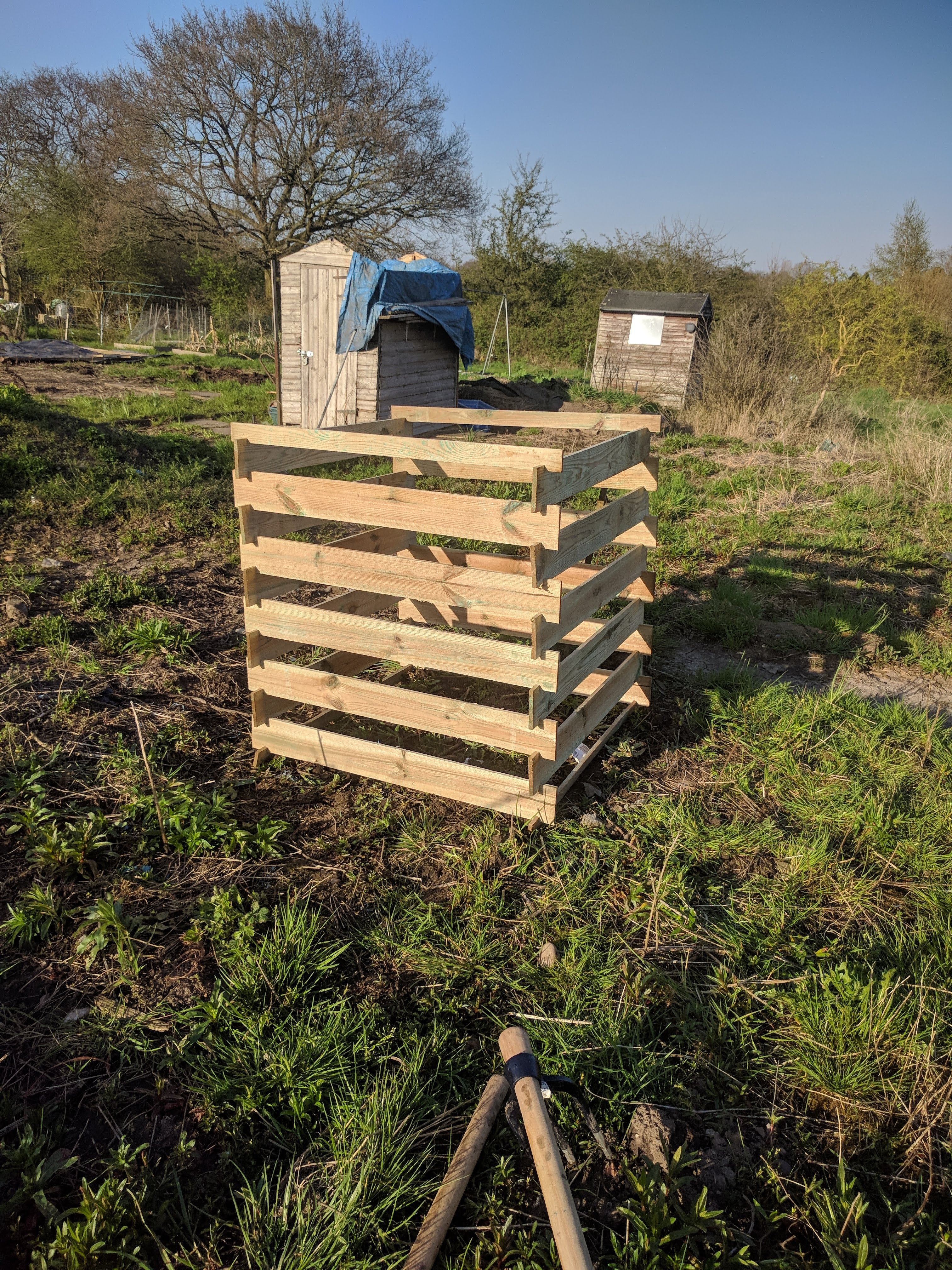
IMG_20180420_181119.jpgFinally got on the allotment on Friday in the early evening sunshine. Soil is still very damp but most of the standing pools of water seem to have disappeared. The day’s task was to build my first compost bin.  I’d intended to build a suite of bins from pallets – and think I have found a source of these for about £2 each. However, I jumped the gun and bought a kit online at ManoMano which I managed to get for £18.99 (allegedly reduced from £50.99 although definitely not worth anything like that). It slotted together fairly easily – a rubber mallet might have helped but tapping each board down to ensure it was properly slotted together was easily done with another board. (Although have to confess I did break one slightly when I leaned on it too heavily!)

I wasn’t entirely sure where to site it – it’s not quite where it appears on my allotment plan. There are still some brambles to remove at the back of the plot – and contractors may need access across my plot to rotavate a vacant half-plot next to mine. So I just plumped for a spot near where I think the right hand edge of my plot is adjacent to what may be a path!

Once built I started to add some content – started with some brown material (cardboard & dried twigs) followed by green (grass clippings from my neighbours) and then more brown (a bag of partially decomposed compost – actually this looked like it might have been from my worm bin and could have gone straight into one of my beds). Now I need to find more material to add – not sure how much I will find on my plot itself as I’m building my beds on top of weeds etc. So will be reliant on kitchen waste (via my bokashi bin or worm bin) & anything I can scrounge or find locally.

Community Composting

Both my front and back gardens are hard-landscaped – and lawn mowing was never one of my favourite occupations so I’ve no intention to install any turf anytime soon.  But it does mean that I don’t generate any grass clippings to add to my composting process. But a couple of my neighbours do have lawns, so when I spotted one mowing in the sunshine on Friday after first sympathising about the hot and sweaty task I asked what she did with the clippings. They usually ended up at the tip so she was more than happy to let me have hers and her neighbours – a bag full was left in my garden when I got home.  Next time I walked down the road I suddenly heard my name being called and there was my neighbour hanging out the window so she could offer me her vegetable peelings too!

So I’m now having hers, her sister’s (whom I’ve never met) and another neighbour’s too.  I have a bokashi bin in my kitchen and a worm bin out in my shed but it takes me a while to fill either as I don’t generate much waste – I don’t peel most of my veg and my dog eats any meat or fish scraps.  So having some extra ingredients will help me fill my bucket quicker. But I am slightly shocked at what my neighbours are throwing away – a perfectly good head of celery, half a white cabbage and lots of broccoli stalks (the best bit!) in addition to peelings of parsnips, carrots and potatoes. I’ll see how it goes before I ask any other neighbours for their contributions…..

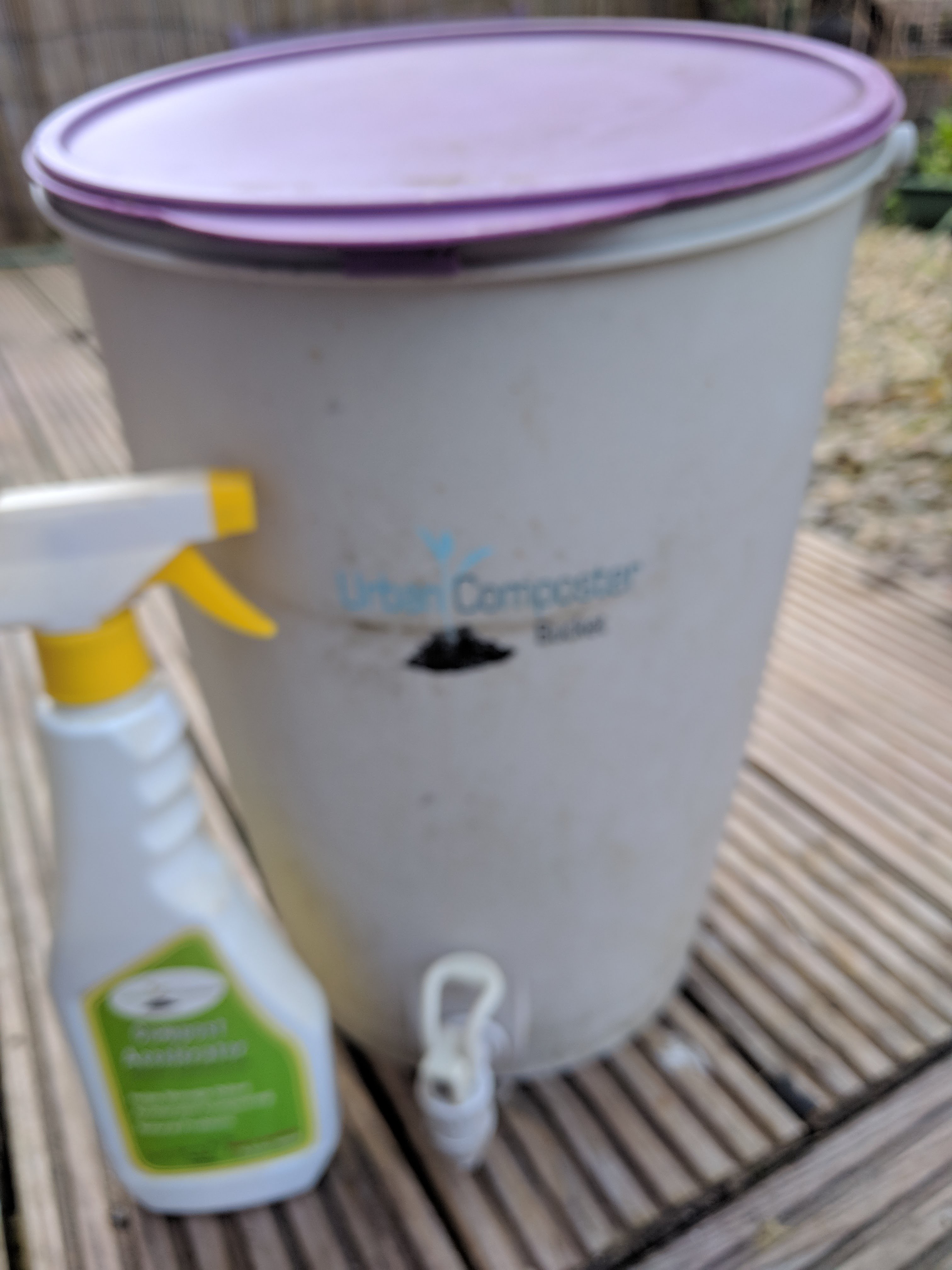
And to help in my composting I found this Urban Composter bucket and a full compost accelerator sitting on a wall nearby.  Having just filled a bokashi bucket (with the help of my neighbour’s leftovers) I’m going to start using this bucket and spray and see how it compares with using the bokashi bran.  IMG_20180421_102309.jpg

My main quest though for the past two weeks has been to find a source of manure – the allotment holders all use a guy called Ron who has stables but he appears to be very elusive. I’d left two messages and phoned innumerable times. I was advised he ‘was a bugger to get hold of’. But to my surprise he answered the phone the other day – appararently due to the bad weather he hadn’t been able to move his horses or get at his manure but the weekend weather should enable him to do this.  He knew I’d left messages – as had several other allotment holders – but as he said about himself he’s ‘a bugger to get hold of!’

So I’m still not sure when I’m getting my delivery but hopefully sometime this week – I’ve no idea how much a trailer load of well rotted horse manure looks like or how many of my beds it will fill.

I have been searching Gumtree & Freecycle for manure (& other allotment requisites) but not found anything as cheap as Ron’s – £25 per trailer load delivered.  I did however respond to an ad for 35kg of chicken manure for £10.  I collected it yesterday and not sure I’ll make a regular habit of it! It’s very smelly (so slightly uncertain about transporting it in a car club car!) and its also not very well rotted so will need to be very careful how I use it.  I put a little bit on the compost heap but think I will leave the rest in a heap until its broken down – and even then will use sparingly.

And that’s it on the compost/manure front for now – will write more when I finally get some manure and can start filling my beds……