Garlick maketh a man wynke, drynke, and stynke

Having only taken over my plot in April I didn’t have much time to research garlic varieties last year & being in a hurry to get something in the ground I just picked up a bag of an unnamed variety in my local garden centre – I did have a crop but nothing to rave about and chose not to save any cloves for replanting.  Of course I now realise that I should have had them planted out much earlier and am much better prepared this year.

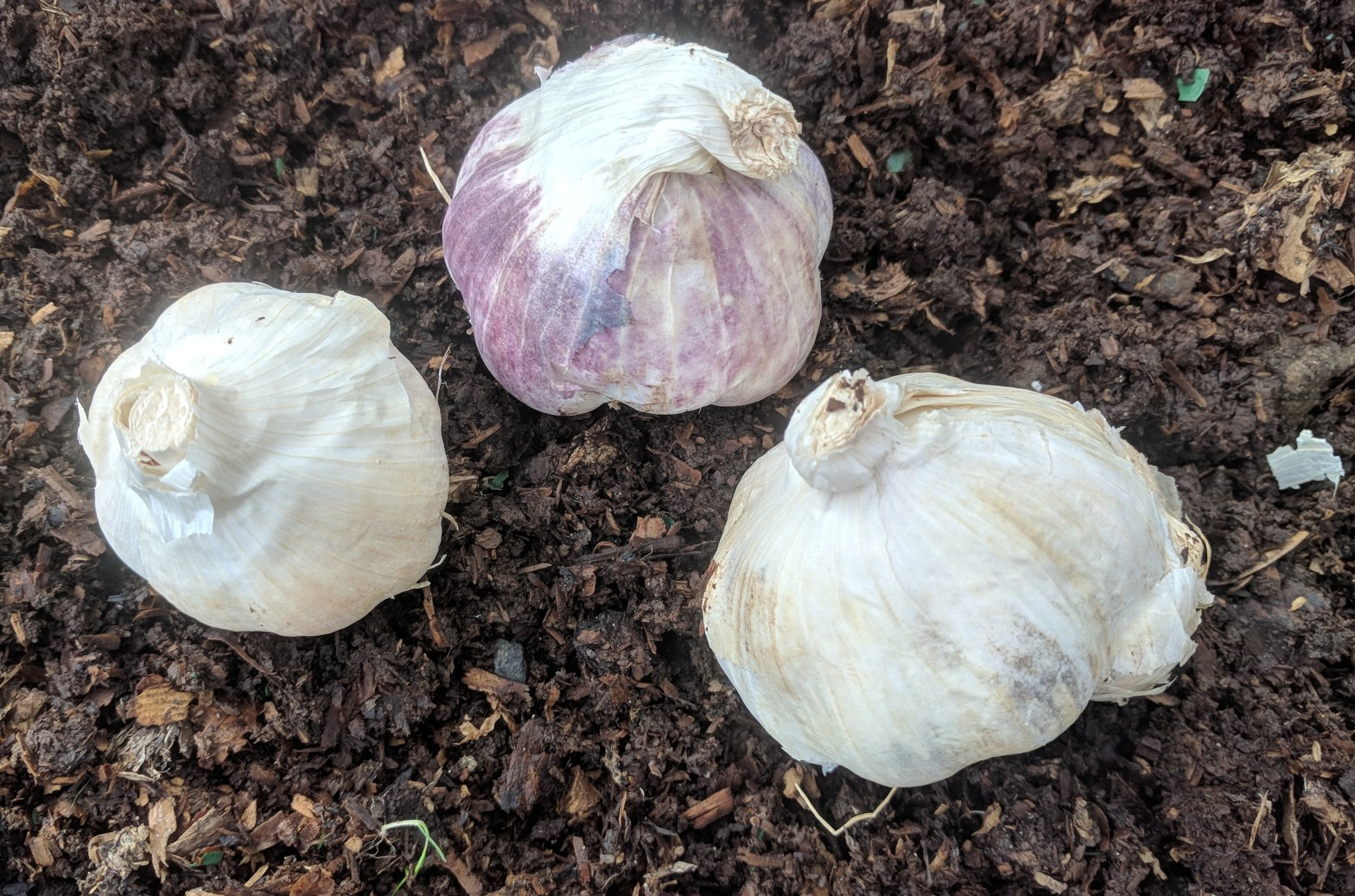
So back in the autumn I gave it a little more thought although also gave considerations to cost (which I’m not slightly regretting!). Anyway, for a named variety I opted for Lautrec White, a hardneck type, because I’ve never eaten garlic scapes and decided the best way to get some were to grow and harvest my own. Why Lautrec white? Simply because it came across as being one of the best tasting garlics – and taste has to be top of my list of desired features for any crop. I am a little concerned though that it isn’t partial to damp conditions being as my plot was pretty sodden when I took it on – hoping the raised beds I’ve put it will keep it out of the worst of the flooding! My economy purchase was a 500g bag of assorted softneck varieties from Simply Seeds.  I thought this way I could sample a  number of varieties without being completely overrun – but the downside is I may not be able to identify my favourite post harvest, hence my slight regret. And although not a true garlic I have also planted Elephant garlic – some from Simply Seeds and some other cloves I picked up at the Malvern Autumn show although I omitted to make note of the seller/grower.  And finally I have purchased for planting in spring some wilder types of garlic including Crow garlic, allium vineale, from Norfolk Cottage Gardens and Ransoms, allium ursinum, given to me by a friend, Other garlic flavoured plants I already have include garlic chives Allium tuberosum, and society garlic, Tulbaghia violacea.


I’m looking forward to seeing how they all turn out next year but meanwhile have been reading a little about garlic heritage.

“Garlick maketh a man wynke, drynke, and stynke” – or so said Thomas Nashe in The Unfortunate Traveller first published in 1594. It seems that garlic has, in the UK, waxed and waned in popularity over the centuries. The fact that the name by which it is widely known originates from the Anglo Saxon word gārlēac, suggests that it was known in Britain from ancient times.  (If you are interested in more on the etymology of this and other herbs and spices I can recommend Gernot Katzer’s Spice pages but don’t blame me if you lose yourself in it for a few hours!) Another disliker of garlic was John Evelyn who described it thus in Aceteria: A Discourse of Sallets

Garlick, Allium;  Whilſt we abſolutely forbid it entrance into our Salleting, by reaſon of its intolerable Rankneſs, and which made it ſo deteſted of old; that the eating of it was (as we read) part of the Puniſhment for ſuch as had committed the horrid’ſt Crimes. To be ſure, ’tis not for Ladies Palats, nor thoſe who court them, farther than to permit a light touch on the Diſh, with a Clove thereof, much better ſupply’d by the gentler Roccombo

But despite his objection to its use in salads he is apparently credited with being a promoter of ‘enriching salads by rubbing garlic around the dish as the Brahmins did’.

Luckily garlic seems to be undergoing a renaissance, helped by growers in the UK and North America (& elsewhere) who are once again introducing us to the wide range of varieties available to both grow for ourselves or to consume.  I’m certainly looking forward to discovering more for myself about the nuances of flavour from those I am trying out in 2019.

PS I came across a great piece of writing about garlic and its cultural and emotional associations in a essay by Stephanie Susnjara published in Creative NonFiction in 2006. It’s available to read on the Jstor website which you can sign up to for free and read a limited number of articles.
A growing addiction?

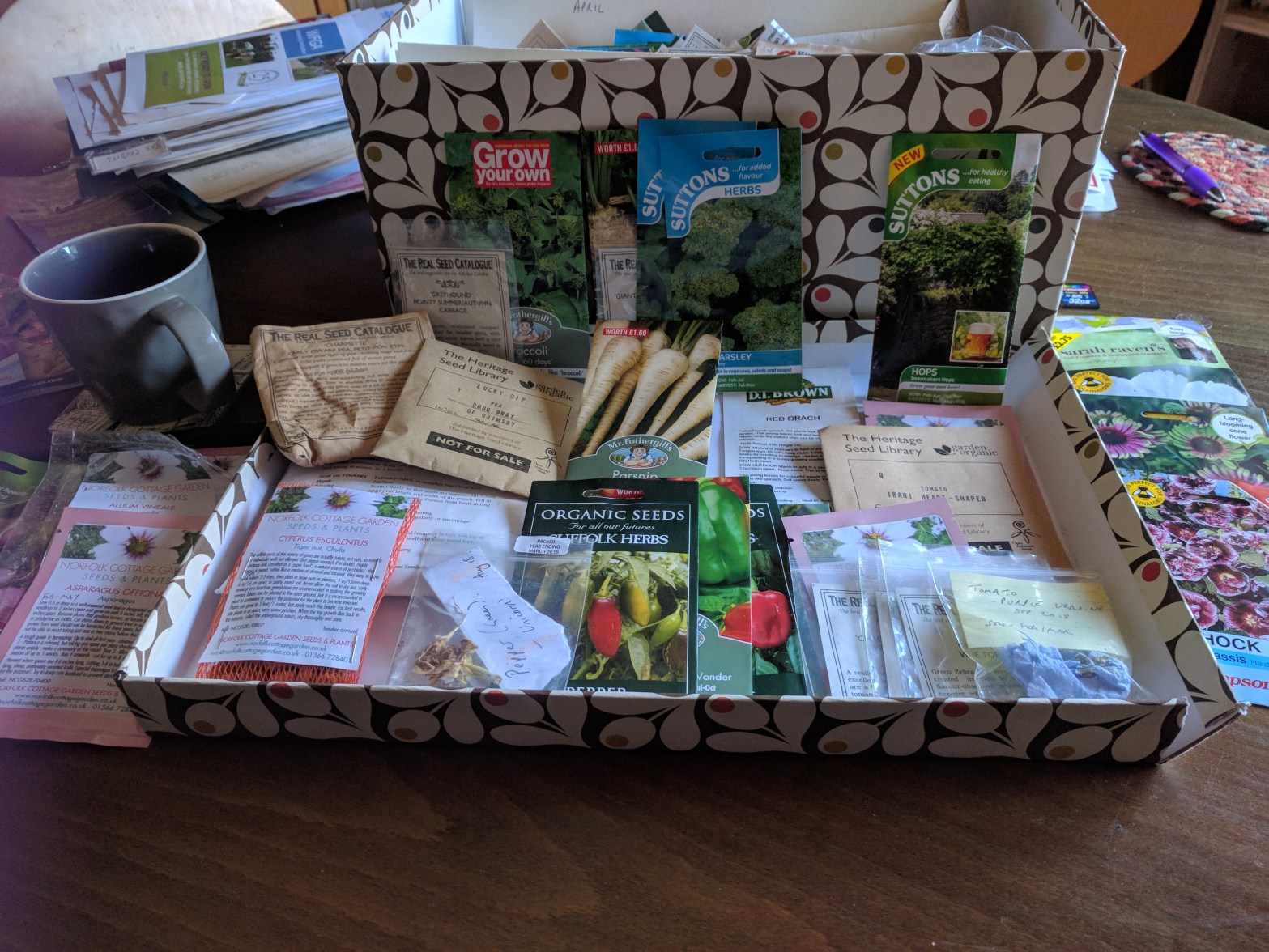
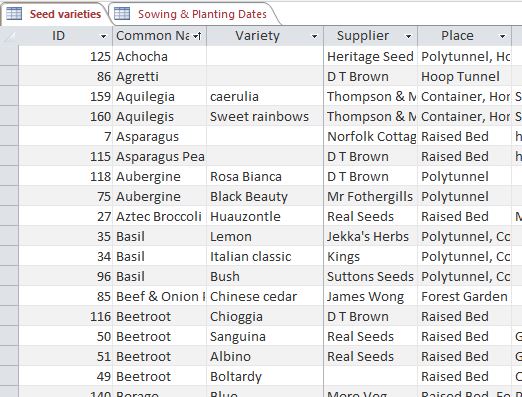
Laid up with a bad back recently (an unfortunate cycling-related injury – something went twang as I stood up after locking it up!) I decided to have a go at sorting out my seeds. Before I knew it I had opened up Access and was putting together my very own seed inventory and database – how nerdy is that?  I was somewhat horrified to discover that I had over 120 types of seeds – is this usual?

Allotment database

I did only take on an allotment in April last year so I seem to have accumulated these packets in a fairly short space of time. And they don’t include the empty packets from varieties that I grew and used up all the seed this year.  So where did they all come from? And what am I going to do with them all? Surely I can’t find space to grow that many varieties – and if every seed was viable I would have enough for a large market garden.

In my defence I didn’t buy all of them. My neighbour gave me quite a number of packets surplus to her requirements – many of them ‘free gifts’ with various gardening magazines. They were either varieties she didn’t like or types of vegetables that she had no interest in growing. I’ve had a few given me as presents – including a couple from my son after visits to a Cornish garden and Kew gardens. And they do include some seeds I saved myself last year – including two types of tomato I grew in the garden, pepper seeds from a green pepper my neighbour gave me to taste, french, runner and field beans I harvested on the allotment and several types of squash from fruit I’ve purchased from my local farmers’ market. But the majority I have bought myself either online from a variety of seed companies including small independents such as Real Seeds, Incredible Vegetables, Tamar Organics and Norfolk Cottage Gardens; or from garden centres and some bargains from the Malvern Autumn Show. Plus my six choices and a surprise freebie from my first selection from the Heritage Seed Library.

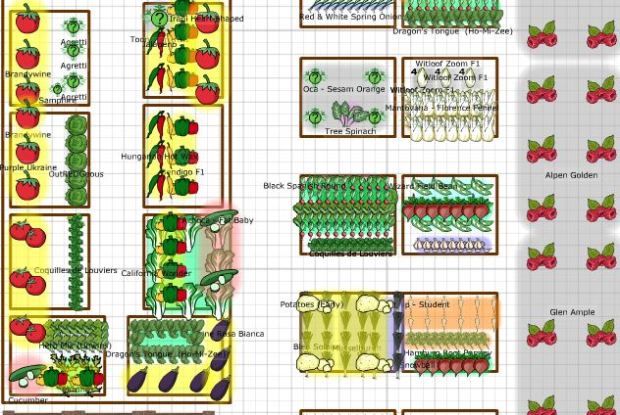
As I’ve added each type of seed to the database I have also been allocating space to the crop on my garden-planner. And adding the particular variety and any notes about it to the plant list.  I intend to use the growing chart the planner produces as I probably couldn’t produce anything as good, let alone better, from my own database.

Allotment Planner

I’m reconfiguring some of the layout of my plot to allow for the hopeful restoration and resiting of the polytunnel and in the hope that I will finally get my shed erected. And I am trying to use the data about planting and harvesting dates to make some sensible decision about succession planting to make the most of the space and number of beds I have available.  But trying to find suitable spaces for the sheer numer of varieties I really want to try is proving challenging! And I do have a nagging question at the back of my brain about how many vegetables I can actually eat! And fairly soon I will have to face the very vexed question of just where am I going to find space to get these seeds started – they’re not all going to fit on my kitchen window sill 😉

Is this normal – or am I becoming a secret hoarder of seeds? Am I making a newbie error behaving like a kid in a sweetie shop? Will I regret the error of my ways when I start looking closely at the sow-by dates? Answers on a postcard please….. 😉


A new Kale

I made a rare visit to my local garden centre last week as I had a couple of vouchers to use and was passing by anyway.  Not a lot I particularly needed but didn’t want to miss out on £7 worth of vouchers which were due to expire the following day. Scoured the Manager’s reduction shelves & was almost tempted by some winter pansies but opted instead for a marjoram plant for £1 and then some reduced sedums (I do occasionally buy some inedible plants!) as I already have a few and wanted a few more for a planned display next year.

I tried to avoid the seeds but my eye was caught by a sign which said “plant now” and this piqued my curiosity. The display included a few microgreens and winter lettuces, none of which took my fancy but there was also a red kale with the unprepossessing name of KX-1. Sold by Thompson & Morgan it promised ‘attractive kale for baby leaf and full maturity’ and priced at £2.49 (£2.99 on their website). Interestingly the packet gives different growing instructions than the website – the packet suggests sowing under glass or indoors from October through to March for use as baby leaves. A bit of scouting around online I discovered that this is, as I suspected from the lack of a more descriptive name, a newly developed variety, originating in the US and developed by Vilmorin North America and now being grown in the UK to meet the demand for kale for bagged salads for supermarkets. And also with added nutritional benefits as it has much higher iron content even than spinach – and apparently in a more easily digestible form. So an enhanced superfood!

So definitely unlike the heirloom varieties I’m normally attracted to. But I will be planting them and growing on my kitchen windowsill this weekend – and should be starting to pick them in 35 days as baby leaves. And if they look as attractive as on the packet they’ll help to brighten up a dreary January day. Watch this space….