
Hard to believe we’re into November already! Where does the time go? But even though the days are shortening and the temperatures dropping I’ve been finding lots of opportunities to visit my allotment plot and have been reaping the rewards of earlier plantings whilst getting lots of prep done for next year.
I’m still harvesting lettuce – Morton’s Secret Mix from Real Seeds 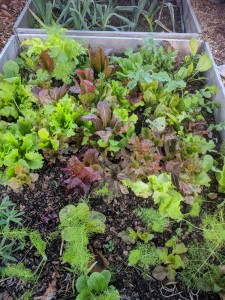 – taking a few leaves at a time from each plant. Throughout the summer I’d had no success at all despite several sowings but by September my last sowing had germinated and despite a slow start finally produced a decent crop and the plants are still going strong. This mix includes Reds, greens, brights, darks, splashes, blushes, crisps, butters, leafs, heads, and tongues. The mix is really attractive in a salad and all of them are tasty.I’m harvesting a bag full of leaves about once a week. Surprisingly they last really well in the fridge – much better than a commercial bag of salad despite them probably being in a protective atmosphere (at least until the bag is opened!).
I’ve been able to supplement this late summer crop with oriental greens – particularly 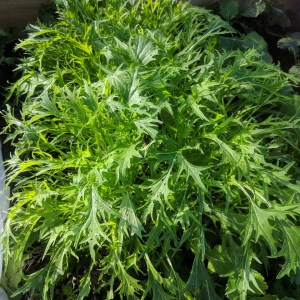 mizuna and with some mustard greens too. I was intending to make some successional sowings but haven’t gotten around to it (yet!) But if the mizuna keeps producing as well as it is at the moment maybe it’ll keep me going all winter….
I’d originally planted it in a bed in the polytunnel but once that had blown away I just put a fleece over it. I can’t quite believe that a thin fleece can do much to stop freezing temps – I’d need one more than a few microns thick! – but it will keep off pests including the local pigeons. And the plants are supposed to be frost hardy anyway.
The beans and tomatoes are almost a distant memory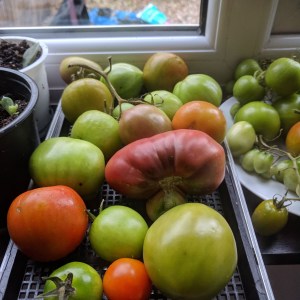 now although I do still have some from my garden ripening on the kitchen windowsill. I’m not a huge fan of chutneys (have to confess I prefer Branston pickle) so will wait for them to ripen gradually. I do fry some of them green and have with a breakfast fry-up.
Although not a huge radish lover I’m hoping to be converted by different varieties, especially not I’ve discovered that cooked in a stir fry they 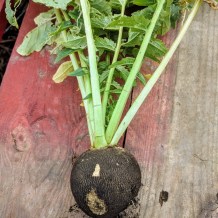 actually taste quite pleasant. So I’ve tried some Spanish black radish
I’ve not had a huge success with my brassicas although some are now coming on. Despite being netted they have suffered some insect damage and now seem to have a whitefly infestation – do they not get killed by the cold?
I’ve had a couple of small broccoli spears and one slightly manky cauliflower. But the Cavolo Nero is looking good and I’ve started harvesting it by taking a few leaves each week. There are a few cabbages which are starting to heart up and I even discovered some tiny sprouts starting to form – maybe they’ll be ready for Christmas? 😉
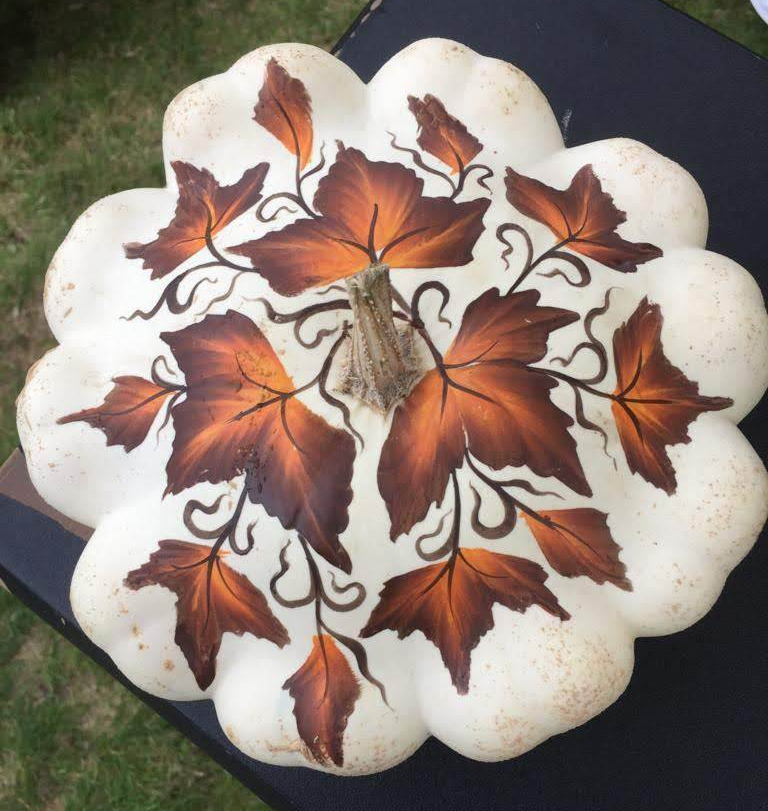
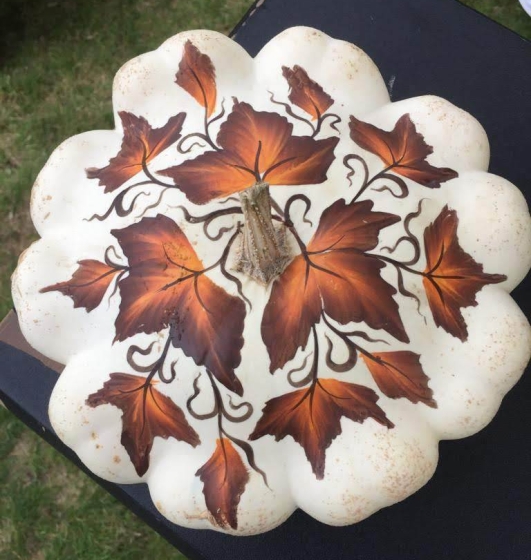
It was Halloween this week and I had managed to grow one pumpkin! I’d picked it a couple of weeks ago whilst still green and had hoped it would ripen and go orange by 31st but it was still mainly green. I did do a very last carving to put outside for trick and treaters.


But my daughter’s creative skills put my feeble efforts to shame – and will provide a much longer lasting autumnal decoration.
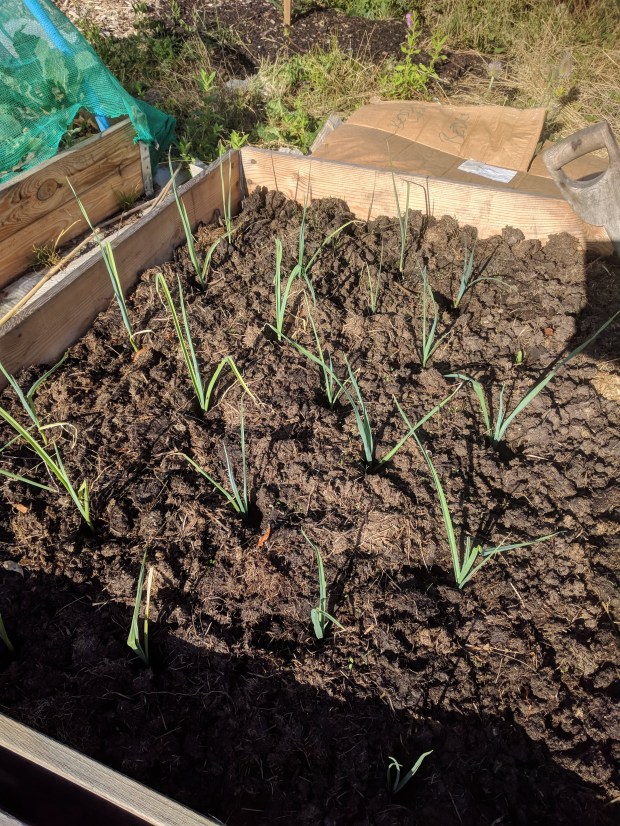
I’ve planted garlic and elephant garlic together with onions to see how they overwinter. And also field beans as a green manure on a couple of beds. Not too worried about the cold but am concerned about how wet it might be given that my plot was very sodden when I first took it on. I’m hoping that using raised beds will keep them out of the worst of the floods.
But I am disappointed about my leeks 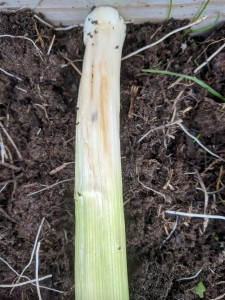 which have been infected by the dreaded allium leaf miner. The green leaves showed no signs so I was unaware of it until I harvested a couple of stems last week. So I’ve now harvested them all and disposed of any infected material. And so instead of a crop that I hope would keep me going over winter, I’ve been left with a few usable remnants that might just be enough to make me cup-of-soup! And of course, I am also a tad worried in case the bugs get onto my young garlic or onions. I’d planted elephant garlic in a gap in the leek bed but following the discovery of the ‘miners’ thought I should move them before they got too established. But furtling around in the soil to find them as they don’t have any green growth yet I was surprised to discover how much root growth they had put on. I didn’t feel I wanted to disturb them as they were doing well so decided to take a chance on leaving them in situ and will cover them with mesh to prevent any later infestations.
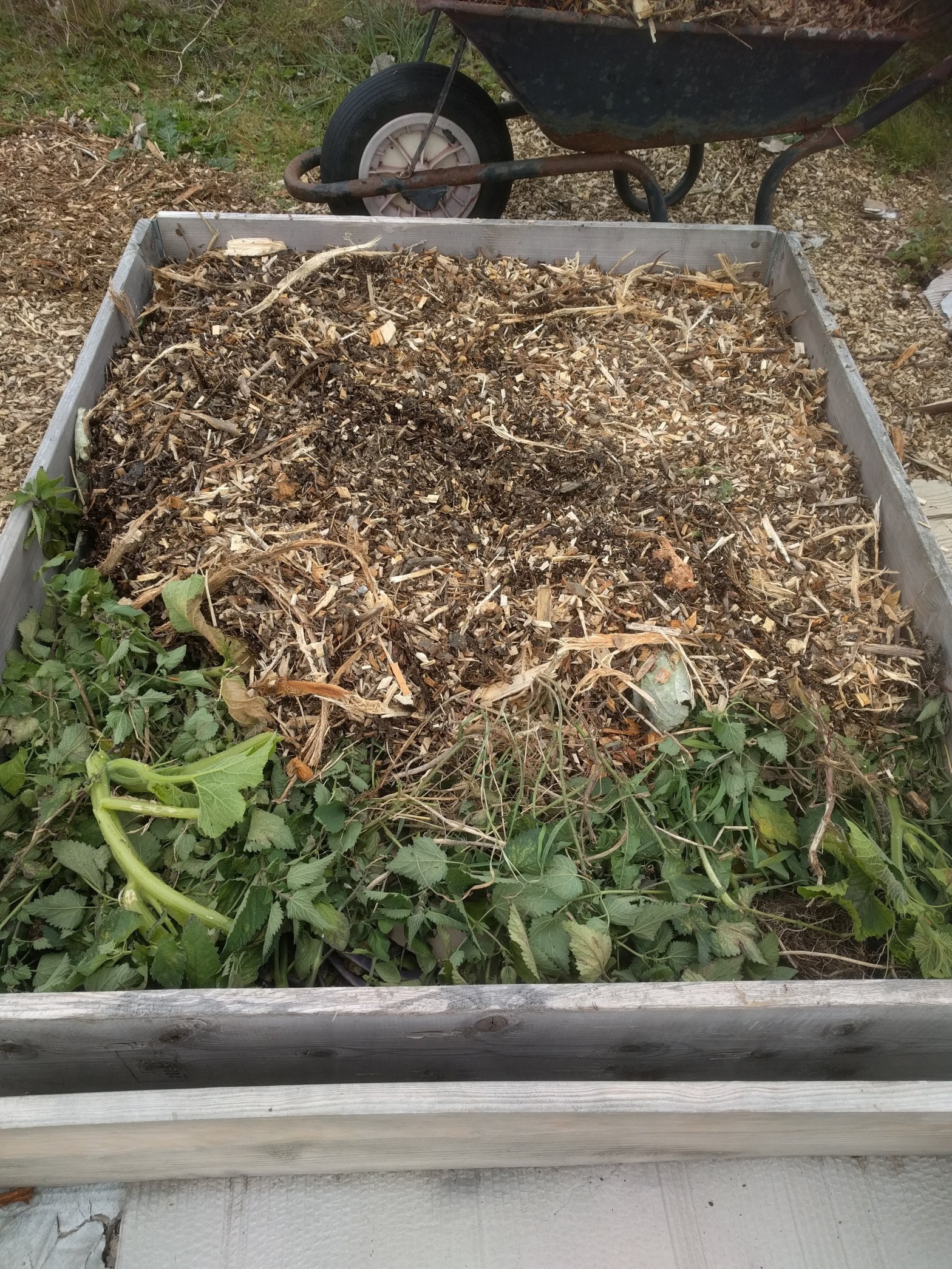
So all in all a bit of a mixed bag on the production side but I am pleased with the progress I’ve made on prep for next year already. I’ve set up several more raised beds using the lasagna bed methodology. Layers have included cardboard, horse manure, semi-rotted compost, green and kitchen waste and leaves. I’ll top up with a layer of compost when I’m ready to plant them. I’ve sown a couple with a green manure mix and another with field beans which I’ll possibly chop as a green manure but may be tempted to leave to produce a crop.
And I’ve planted a few perennials – currant and gooseberry bushes, Daubenton’s Kale and asparagus and moved the strawberry bed. So a productive month in many respects.
Will be concentrating now on prep for my first full gardening season in 2019; getting my shed built and hopefully salvage the polytunnel. And sorting out my already large seed collection and filling the gaps from the ever-growing stash of catalogues piling up by my desk.


 My Plenty Food Project